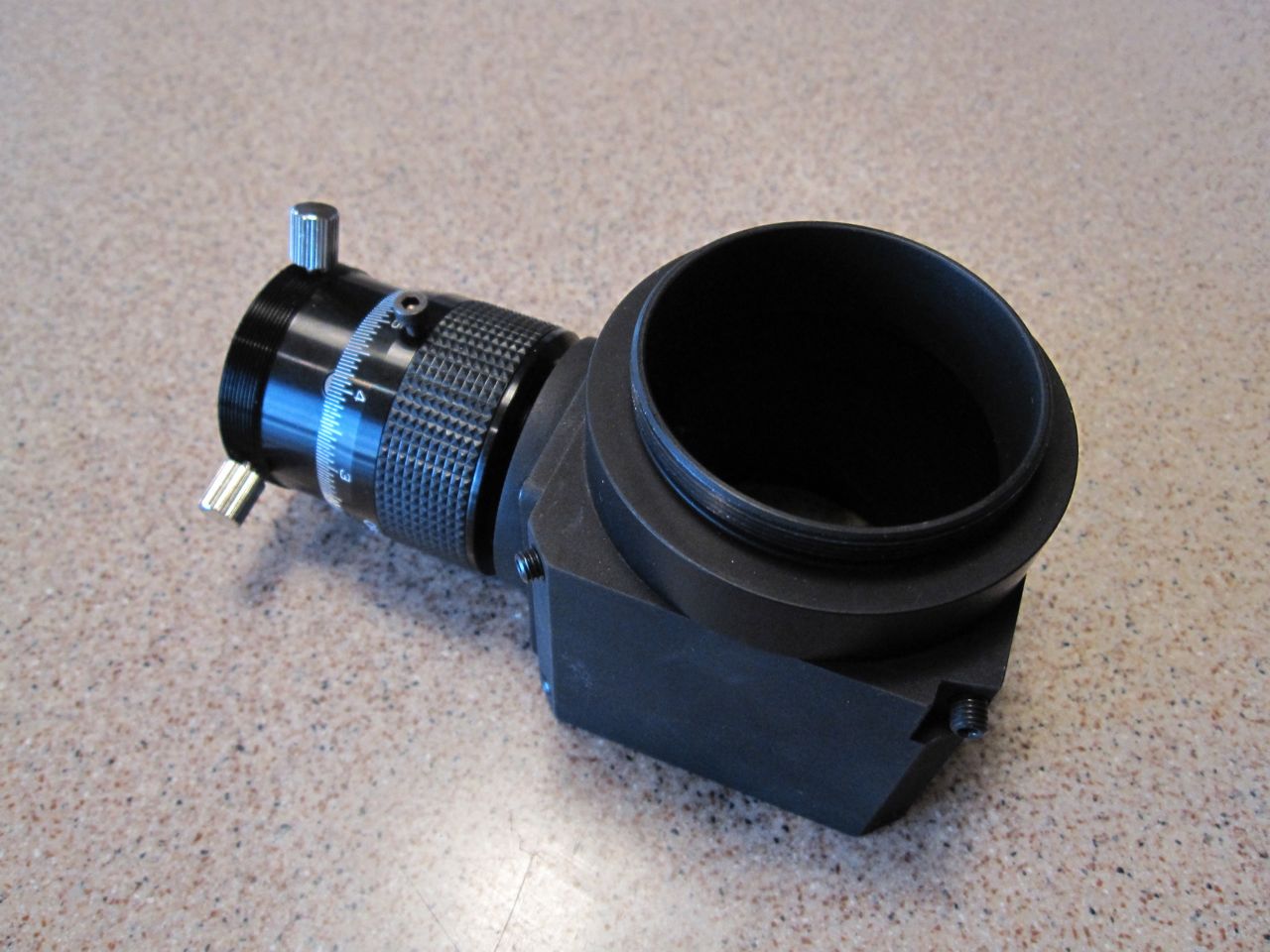
In August 2011, I decided to upgrade my optical train. The initial upgrade was to be the FW8-STL, an 8-position computer-controlled filter wheel which replaces the internal 5-position filter wheel in the STL-11000M camera; this would allow me to move to full narrowband images - Ha, OIII, SII as well as the normal L, R, G, and B (so 7 filters are required in total). The FW8 filter wheel is quite heavy, and I was unsure of whether the 2" TCF-S focuser I was using would handle the additional weight. In addition, with narrowband filters (very narrow at 3nm bandwidth), not much light from stars gets through the filters, so guiding with the normal guidechip (a second, smaller CCD in the SBIG cameras) is usually not practical - it is nearly impossible to find a bright enough guide star ... and then the framing of the image may become non-optimum. So, an off-axis guider and remote guide head is needed, which can pick off some light from the scope before the light passes through the narrowband filters - such light being focused (by a Borg helical focuser) onto the chip of a small CCD guide camera - in my case, the "remote guide head" (RGH) which is an accessory to the STL-series SBIG cameras. The Astrodon MOAG (Manual Off-Axis Guider) is designed to fit nicely between the AO-L adaptive optics unit and the STL camera/filter package, picking off a bright star ahead of the filters, which can be guided on via the remote guide head (RGH). As shown above, it has a telescope side and a camera side, and includes the Borg helical focuser in which the RGH is mounted. The photo below shows the prism inside the MOAG which samples starlight from the field (which should be just above the main CCD chip), and sends it to the RGH. |
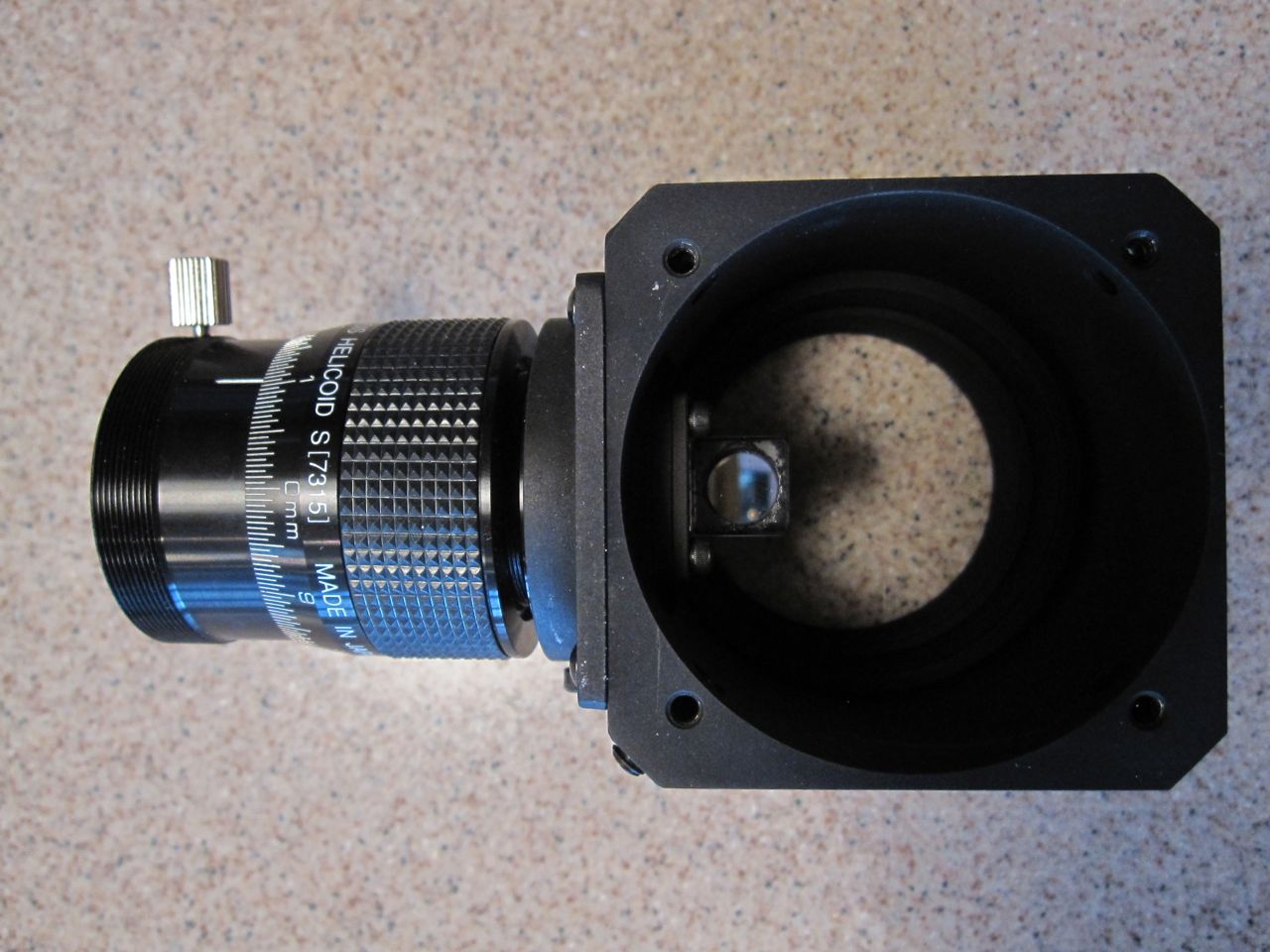
At right, you can see through the MOAG - and the prism which picks off some of the field to send to the remote guide head. As you can see, the prism is well into the 2" image circle - and in this case a bit too far, as I have a shadow of the RGH at the top of my main image. I will need to disassemble the MOAG and remove any spacers placed before the prism (just to the left of the prism), moving the prism farther out of the field (to the left in the photo), and removing the shadow from my main image. Hopefully, the RGH will still have a good field of stars, and hopefully these won't be so far off-axis as to introduce distortions, limiting how well I can focus on the guidestars.
|  |
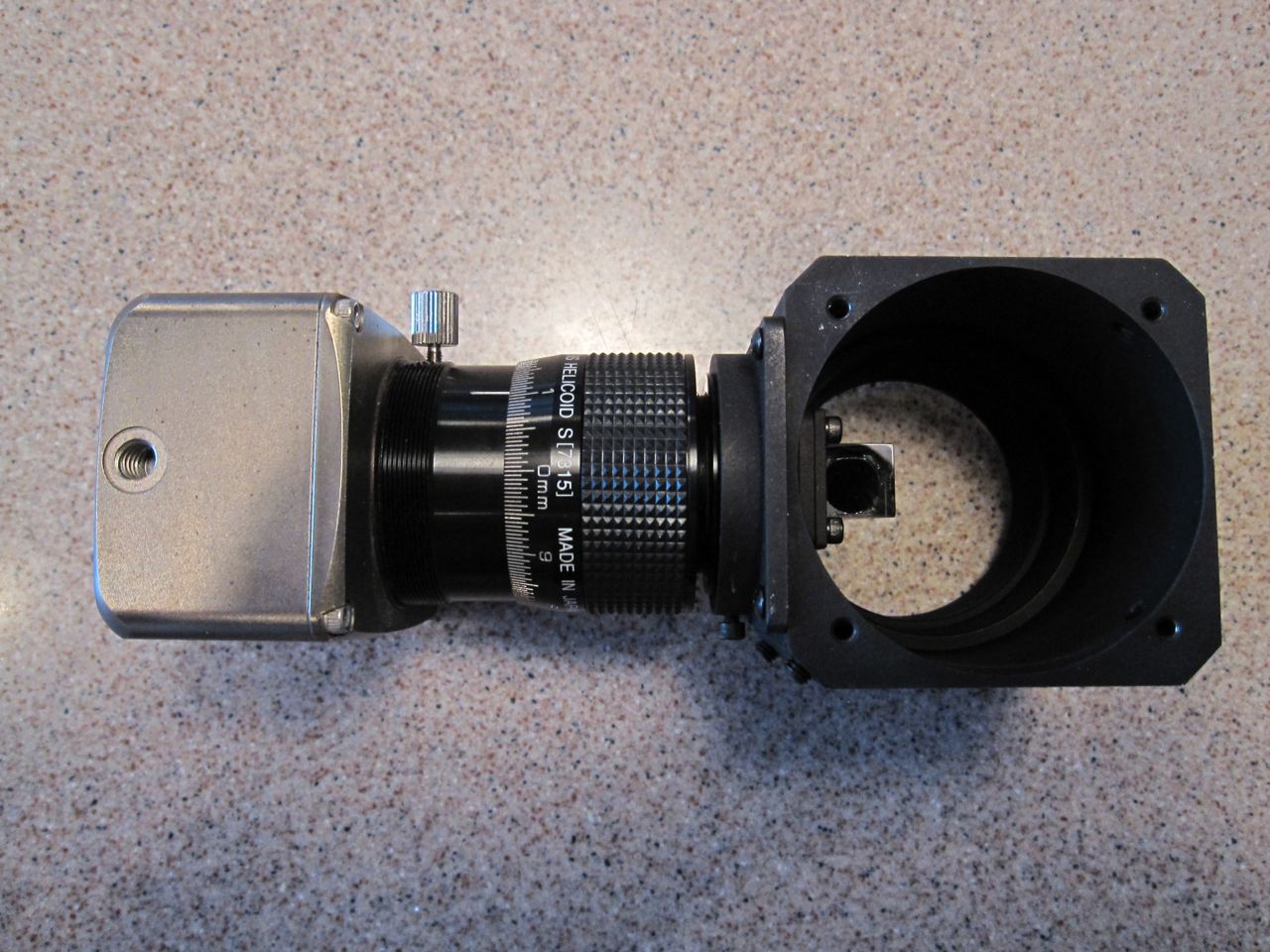 | Here you can see the RGH connected to the MOAG via the Borg helical focuser.
|
| Another view of the RGH connected to the MOAG via the Borg helical focuser. The STL adapter is connected to the MOAG (at top right). | 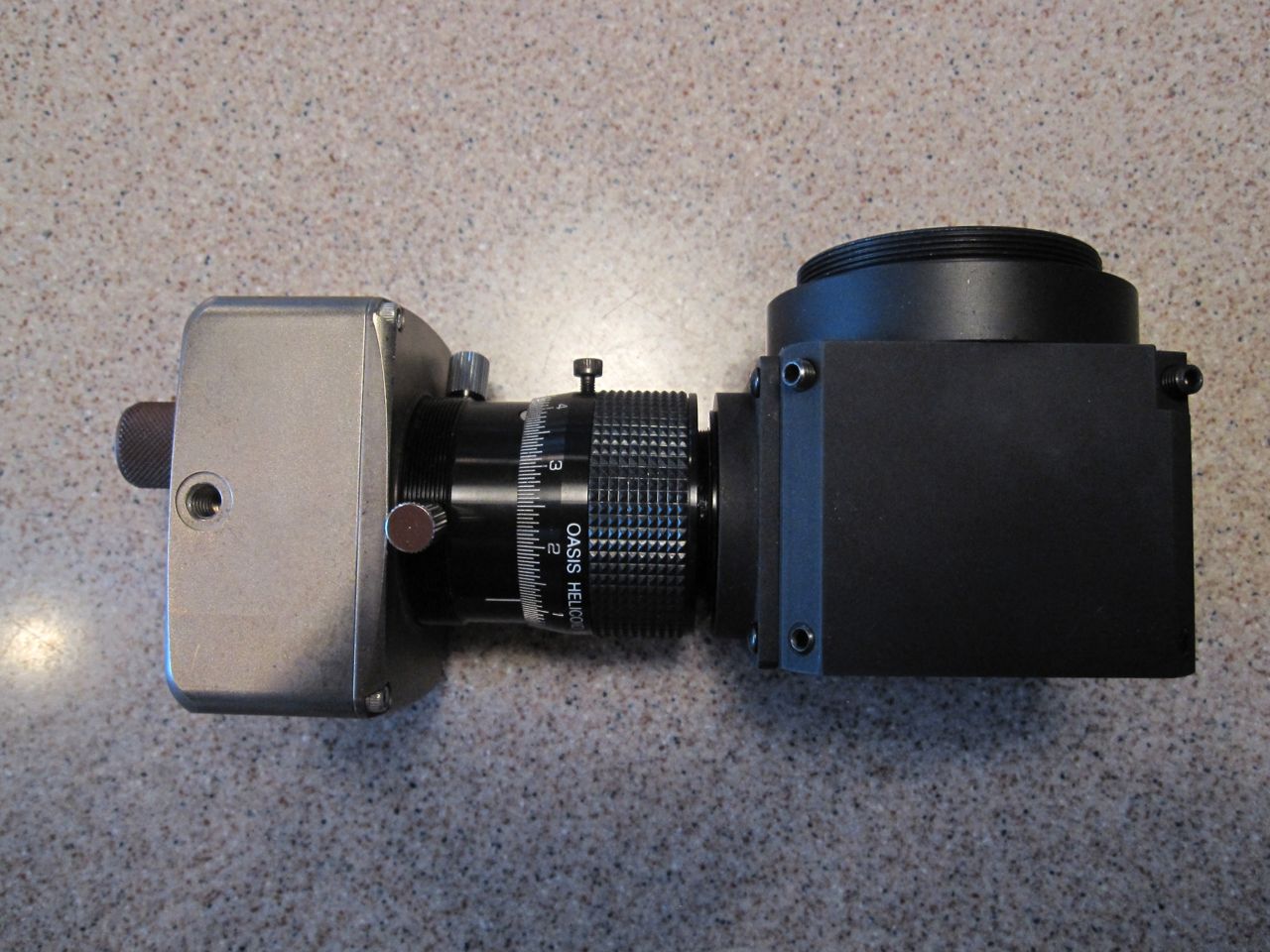 |
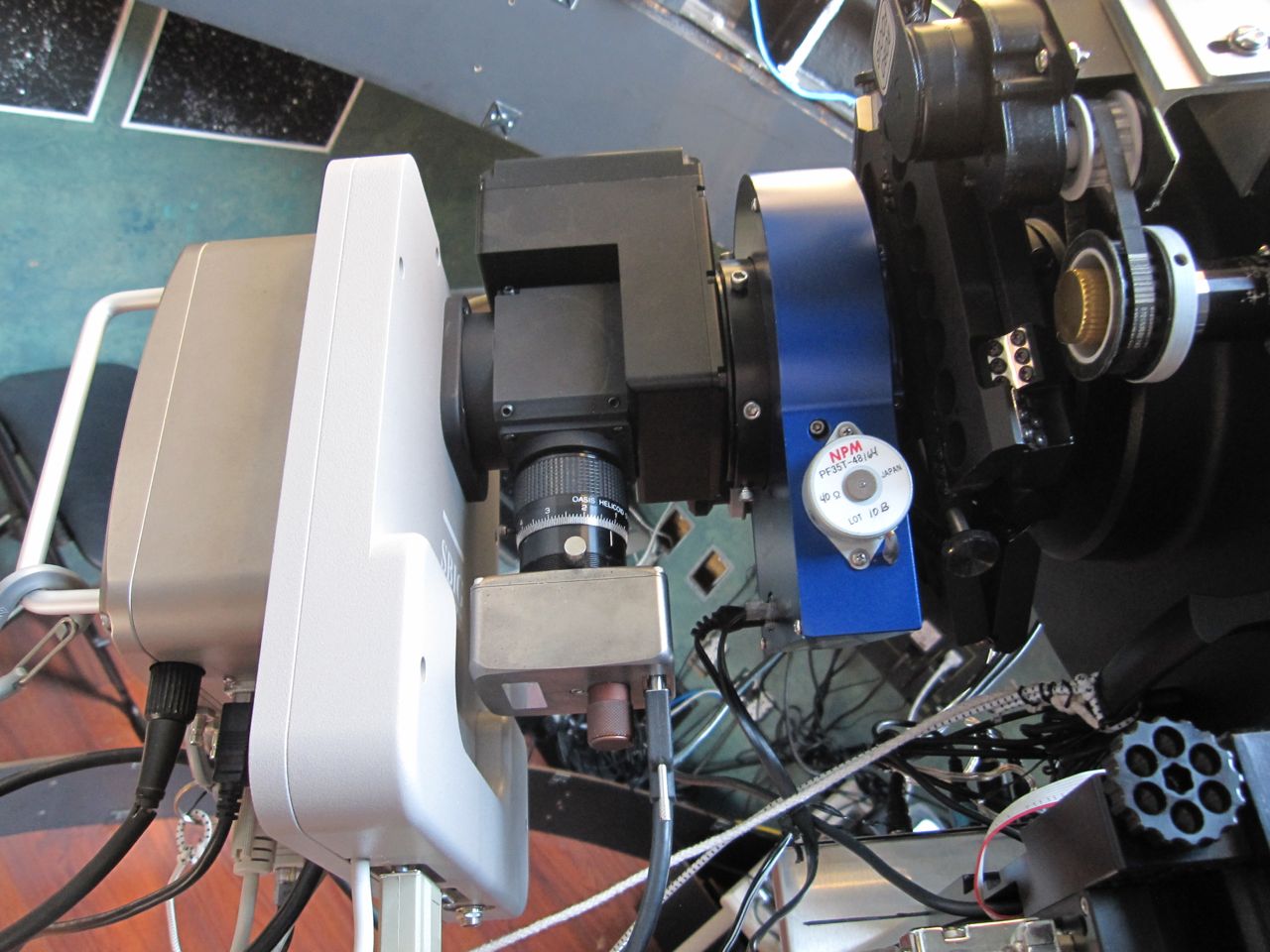 |
And here is the entire optical train, assembled and connected to the back of the scope. In the center, you can see the AO-L/MOAG/RGH package - neatly fitting between the Pyxis rotator and the FW8 filter wheel and camera. Please note that this image shows the AO-L/MOAG/RGH turned 180 degrees from the conventional position. I will need to turn it back around - and turn the RGH so that its connector closest to the camera - in order to get everything to work properly with CCDAutoPilot (which calculates the mount "bump" directions from the AO-L). |
| |